MAX232 TTL to RS232 IC
MAX232 is a communication IC. It is used to convert TTL Signals to RS232 Signal and vice versa.?MAX232?provides RS-232 voltage level outputs (approx. ? 7.5 V) from a single 5 V supply via on-chip charge pumps and external capacitors. This makes it useful for implementing RS-232 in devices that otherwise do not need any voltages outside the 0 V to 5 V range, as power supply design does not need to be made more complicated just for driving the RS-232 in this case.
The receivers reduce RS-232 inputs (which may be as high as ? 25 V), to standard 5 V TTL levels. These receivers have a typical threshold of 1.3 V, and a typical hysteresis of 0.5 V.
MAX232CSE
The MAX220?MAX249 family of line drivers/receivers is
intended for all EIA/TIA-232E and V.28/V.24 communications
interfaces, particularly applications where ?12V is not
available.
The MAX225, MAX233, MAX235, and MAX245/MAX246/
MAX247 use no external components and are recommended
for applications where printed circuit board space is critical.
The MAX220-MAX249 are offered in 26 different packages
with temperatures from 0 to 70?C up to -55?C to 125?C.
See ordering information table at the end of the data
sheet for all package and temperature options.
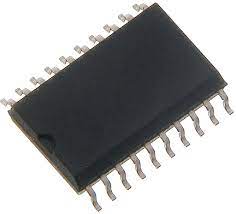
MAX232EWE
The MAX220?MAX249 family of line drivers/receivers is
intended for all EIA/TIA-232E and V.28/V.24 communications
interfaces, particularly applications where ?12V is not
available.
The MAX225, MAX233, MAX235, and MAX245/MAX246/
MAX247 use no external components and are recommended
for applications where printed circuit board space is critical.
The MAX220-MAX249 are offered in 26 different packages
with temperatures from 0 to 70?C up to -55?C to 125?C.
See ordering information table at the end of the data
sheet for all package and temperature options.

MAX233ACWP
The MAX220?MAX249 family of line drivers/receivers is
intended for all EIA/TIA-232E and V.28/V.24 communications
interfaces, particularly applications where ?12V is not
available.
The MAX225, MAX233, MAX235, and MAX245/MAX246/
MAX247 use no external components and are recommended
for applications where printed circuit board space is critical.
The MAX220-MAX249 are offered in 26 different packages
with temperatures from 0 to 70?C up to -55?C to 125?C.
See ordering information table at the end of the data
sheet for all package and temperature options.
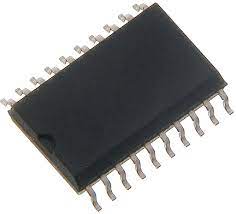
MAX234CWE
The MAX220?MAX249 family of line drivers/receivers is
intended for all EIA/TIA-232E and V.28/V.24 communications
interfaces, particularly applications where ?12V is not
available.
The MAX225, MAX233, MAX235, and MAX245/MAX246/
MAX247 use no external components and are recommended
for applications where printed circuit board space is critical.
The MAX220-MAX249 are offered in 26 different packages
with temperatures from 0 to 70?C up to -55?C to 125?C.
See ordering information table at the end of the data
sheet for all package and temperature options.
MAX236EWG
The MAX220?MAX249 family of line drivers/receivers is
intended for all EIA/TIA-232E and V.28/V.24 communications interfaces, particularly applications where ?12V is
not available.
The MAX225, MAX233, MAX235, and MAX245/MAX246/
MAX247 use no external components and are
recommended for applications where printed circuit
board space is critical.
The MAX220-MAX249 are offered in 26 different packages with temperatures from 0 to 70?C up to -55?C to
125?C. See ordering information table at the end of the
data sheet for all package and temperature options.

MAX238CWG
The MAX220?MAX249 family of line drivers/receivers is
intended for all EIA/TIA-232E and V.28/V.24 communications interfaces, particularly applications where ?12V is
not available.
The MAX225, MAX233, MAX235, and MAX245/MAX246/
MAX247 use no external components and are
recommended for applications where printed circuit
board space is critical.
The MAX220-MAX249 are offered in 26 different packages with temperatures from 0 to 70?C up to -55?C to
125?C. See ordering information table at the end of the
data sheet for all package and temperature options.
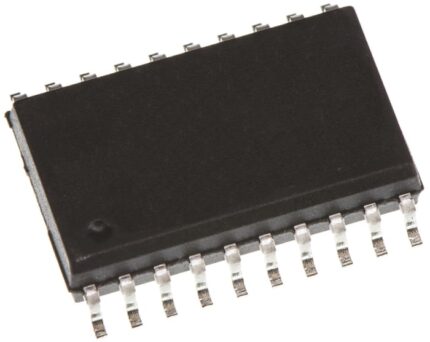
MAX238CWG
The MAX220?MAX249 family of line drivers/receivers is
intended for all EIA/TIA-232E and V.28/V.24 communications interfaces, particularly applications where ?12V is
not available.
The MAX225, MAX233, MAX235, and MAX245/MAX246/
MAX247 use no external components and are
recommended for applications where printed circuit
board space is critical.
The MAX220-MAX249 are offered in 26 different packages with temperatures from 0 to 70?C up to -55?C to
125?C. See ordering information table at the end of the
data sheet for all package and temperature options.

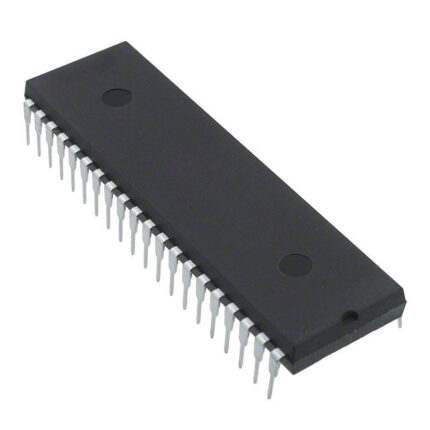
MAX260BCNG
The MAX260/MAX261/MAX262 CMOS dual secondorder universal switched-capacitor active filters allow
microprocessor control of precise filter functions. No
external components are required for a variety of bandpass, lowpass, highpass, notch, and allpass configurations. Each device contains two second-order filter
sections that place center frequency, Q, and filter operating mode under programmed control.
An input clock, along with a 6-bit f0 program input,
determine the filter's center or corner frequency without
affecting other filter parameters. The filter Q is also programmed independently. Separate clock inputs for
each filter section operate with either a crystal, RC network, or external clock generator.

MAX3100CPD
The MAX3100 includes a crystal oscillator and a baudrate generator with software-programmable divider ratios
for all common baud rates from 300 baud to 230k baud.
A software- or hardware-invoked shutdown lowers quiescent current to 10?A, while allowing the MAX3100 to
detect receiver activity.
An 8-word-deep first-in/first-out (FIFO) buffer minimizes
processor overhead. This device also includes a flexible
interrupt with four maskable sources, including address
recognition on 9-bit networks. Two hardware-handshaking control lines are included (one input and one output).
The MAX3100 is available in 14-pin plastic DIP and small,
16-pin QSOP packages in the commercial and extended
temperature ranges.