MAX713CSE
The MAX712/MAX713 fast-charge Nickel Metal Hydride
(NiMH) and Nickel Cadmium (NiCd) batteries from a DC
source at least 1.5V higher than the maximum battery
voltage. 1 to 16 series cells can be charged at rates up
to 4C. A voltage-slope detecting analog-to-digital converter, timer, and temperature window comparator determine
charge completion. The MAX712/MAX713 are powered
by the DC source via an on-board 5V shunt regulator.
They draw a maximum of 5?A from the battery when not
charging. A low-side current-sense resistor allows the
battery charge current to be regulated while still
supplying power to the battery?s load
MAX713CSE+
The MAX712/MAX713 fast-charge Nickel Metal Hydride
(NiMH) and Nickel Cadmium (NiCd) batteries from a DC
source at least 1.5V higher than the maximum battery
voltage. 1 to 16 series cells can be charged at rates up
to 4C. A voltage-slope detecting analog-to-digital converter, timer, and temperature window comparator determine
charge completion. The MAX712/MAX713 are powered
by the DC source via an on-board 5V shunt regulator.
They draw a maximum of 5?A from the battery when not
charging. A low-side current-sense resistor allows the
battery charge current to be regulated while still
supplying power to the battery?s load
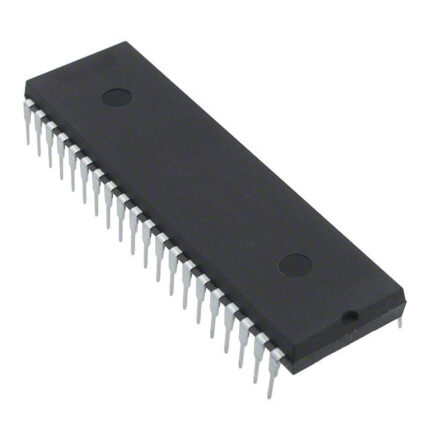
MAX7221CNG
The MAX7219/MAX7221 are compact, serial input/
output common-cathode display drivers that interface
microprocessors (?Ps) to 7-segment numeric LED
displays of up to 8 digits, bar-graph displays, or 64 individual
LEDs. Included on-chip are a BCD code-B decoder,
multiplex scan circuitry, segment and digit drivers, and
an 8x8 static RAM that stores each digit. Only one
external resistor is required to set the segment current for
all LEDs. The MAX7221 is compatible with SPI?, QSPI?,
and MICROWIRE?, and has slew-rate-limited segment
drivers to reduce EMI.
A convenient 4-wire serial interface connects to all
common ?Ps. Individual digits may be addressed
and updated without rewriting the entire display. The
MAX7219/MAX7221 also allow the user to select code-B
decoding or no-decode for each digit.


MAX749CSA
The MAX749 generates negative LCD-bias contrast
voltages from 2V to 6V inputs. Full-scale output voltage
can be scaled to -100V or greater, and is digitally
adjustable in 64 equal steps by an internal digital-toanalog converter (DAC). Only seven small surfacemount components are required to build a complete
supply. The output voltage can also be adjusted using
a PWM signal or a potentiometer.
A unique current-limited control scheme reduces supply
current and maximizes efficiency, while a high switching
frequency (up to 500kHz) minimizes the size of external
components. Quiescent current is only 60?A max and is
reduced to under 15?A in shutdown mode. While shut
down, the MAX749 retains the voltage set point, simplifying software control. The MAX749 drives either an
external P-channel MOSFET or a PNP transistor
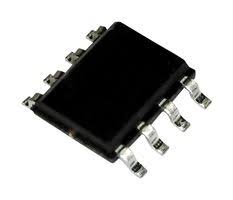
MAX756CSA
The MAX756/MAX757 are CMOS step-up DC-DC switching regulators for small, low input voltage or battery-powered systems. The MAX756 accepts a positive input
voltage down to 0.7V and converts it to a higher pinselectable output voltage of 3.3V or 5V. The MAX757 is
an adjustable version that accepts an input voltage down
to 0.7V and generates a higher adjustable output voltage
in the range from 2.7V to 5.5V. Typical full-load efficiencies
for the MAX756/MAX757 are greater than 87%.

MAX771CPA
These ICs use tiny external components. Their high
switching frequencies (up to 300kHz) allow surfacemount magnetics of 5mm height and 9mm diameter.
The MAX770/MAX771/MAX772 accept input voltages
from 2V to 16.5V. Output voltages are preset at 5V,
(MAX770), 12V (MAX771), and 15V (MAX772); they can
also be adjusted using two resistors.
The MAX773 accepts inputs from 3V to 16.5V. For a wider
input range, it features an internal shunt regulator that
allows unlimited higher input voltages. The MAX773?s output can be set to 5V, 12V, or 15V, or it can be adjusted
with two resistors.

MAX809TEUR+
The MAX803/MAX809/MAX810 are microprocessor (?P)
supervisory circuits used to monitor the power supplies
in ?P and digital systems. They provide excellent circuit
reliability and low cost by eliminating external components
and adjustments when used with 5V, 3.3V, 3.0V, or
2.5V powered circuits.
These circuits perform a single function: they assert a
reset signal whenever the VCC supply voltage declines
below a preset threshold, keeping it asserted for at least
140ms after VCC has risen above the reset threshold.
Reset thresholds suitable for operation with a variety of
supply voltages are available

MAX809TEUR+T
The MAX803/MAX809/MAX810 are microprocessor (?P)
supervisory circuits used to monitor the power supplies
in ?P and digital systems. They provide excellent circuit
reliability and low cost by eliminating external components
and adjustments when used with 5V, 3.3V, 3.0V, or
2.5V powered circuits.
These circuits perform a single function: they assert a
reset signal whenever the VCC supply voltage declines
below a preset threshold, keeping it asserted for at least
140ms after VCC has risen above the reset threshold.
Reset thresholds suitable for operation with a variety of
supply voltages are available

MAX813LCPA
The MAX705?MAX708/MAX813L microprocessor (?P)
supervisory circuits reduce the complexity and number of
components required to monitor power-supply and battery
functions in ?P systems. These devices significantly improve
system reliability and accuracy compared to separate ICs or
discrete components.
The MAX705/MAX706/MAX813L provide four functions:
1) A reset output during power-up, power-down, and
brownout conditions.
2) An independent watchdog output that goes low if
the watchdog input has not been toggled within 1.6
seconds.
3) A 1.25V threshold detector for power-fail warning, lowbattery detection, or for monitoring a power supply
other than 5V
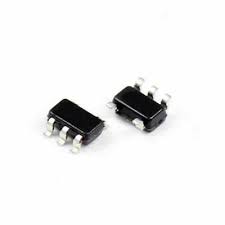
MAX825
The MAX823/MAX824/MAX825* microprocessor (?P)
supervisory circuits combine reset output, watchdog,
and manual reset input functions in 5-pin SOT23 and
SC70 packages. They significantly improve system reliability and accuracy compared to separate ICs or discrete
components. The MAX823/MAX824/MAX825 are specifically designed to ignore fast transients on VCC.
Seven preprogrammed reset threshold voltages are
available (see Reset Threshold Table). All three devices
have an active-low reset output, which is guaranteed to
be in the correct state for VCC down to 1V. The MAX823
also offers a watchdog input and manual reset input.
The MAX824 offers a watchdog input and a complementary active-high reset. The MAX825 offers a manual
reset input and a complementary active-high reset. The
Selector Guide explains the functions offered in this
series of parts
MAX845ESA+
The MAX845 provides an isolated power supply small
enough to fit in thin PCMCIA cards and space-sensitive
applications. It drives a low-profile center-tapped transformer primary from a 5V or 3.3V DC power supply. The
secondary can be wound to provide any isolated positive or negative voltage at powers up to 750mW.
The MAX845 consists of an oscillator followed by a toggle flip-flop. The flip-flop generates two 50% duty-cycle
square waves, which are complementary at half the
oscillator frequency (450kHz, min). These two signals
drive the ground-referenced N-channel power switches. Internal circuitry ensures break-before-make action
between the two switches.