LF411CD
This device is a low-cost, high-speed, JFET-input operational amplifier with very low input offset voltage and
a maximum input offset voltage drift. It requires low supply current, yet maintains a large gain-bandwidth product
and a fast slew rate. In addition, the matched high-voltage JFET input provides very low input bias and offset
currents.
The LF411 can be used in applications such as high-speed integrators, digital-to-analog converters,
sample-and-hold circuits, and many other circuits.
The LF411C is characterized for operation from 0?C to 70?C. The LF411I is characterized for operation from
?40?C to 85?C.

LF444CN
The LF444 quad low power operational amplifier 23? ? Supply Current of a LM148: 200 ?A/Amplifier
provides many of the same AC characteristics as the (max)
industry standard LM148 while greatly improving the
? Low Input Bias Current: 50 pA (max) DC characteristics of the LM148. The amplifier has
? High Gain Bandwidth: 1 MHz the same bandwidth, slew rate, and gain (10 k? load)
as the LM148 and only draws one fourth the supply ? High Slew Rate: 1 V/?s
current of the LM148. In addition the well matched
? Low Noise Voltage for Low Power 35 nV/?Hz high voltage JFET input devices of the LF444 reduce
? Low Input Noise Current 0.01 pA/?Hz the input bias and offset currents by a factor of
? High Input Impedance: 1012? 10,000 over the LM148. The LF444 also has a very
low equivalent input noise voltage for a low power
? High Gain: 50k (min) amplifier.


LM101AH
The LM101A series are general purpose operational ? Improved Specifications include:
amplifiers which feature improved performance over
? Offset Voltage 3 mV Maximum Over industry standards like the LM709. Advanced
Temperature (LM101A/LM201A) processing techniques make possible an order of
? Input Current 100 nA Maximum Over magnitude reduction in input currents, and a redesign
Temperature (LM101A/LM201A) of the biasing circuitry reduces the temperature drift
of input current. ? Offset Current 20 nA Maximum Over
Temperature (LM101A/LM201A) This amplifier offers many features which make its
? Specified Drift Characteristics application nearly foolproof: Overload protection on
the input and output, no latch-up when the common
? Offsets Specified Over Entire Common Mode mode range is exceeded, and freedom from and Supply Voltage Ranges oscillations and compensation with a single 30 pF
? Slew Rate of 10V/?s as a Summing Amplifier Capacitor. It has advantages over internally
compensated amplifiers in that the frequency
compensation can be tailored to the particular
application. For example, in low frequency circuits it
can be overcompensated for increased stability
margin or the compensation can be optimized to give
more than a factor of ten improvement in high
frequency performance for most applications

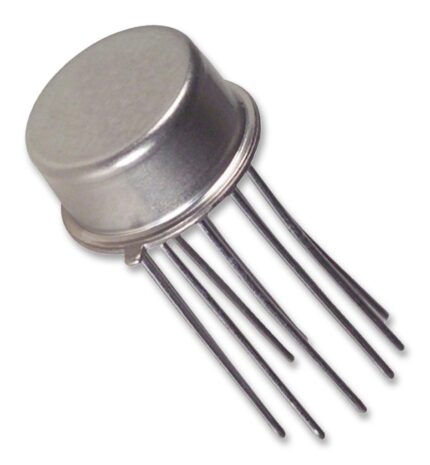


LM118H
The LM118 series are precision high speed ? 15 MHz Small Signal Bandwidth
operational amplifiers designed for applications
? Ensured 50V/?s Slew Rate requiring wide bandwidth and high slew rate. They
? Maximum Bias Current of 250 nA feature a factor of ten increase in speed over general
purpose devices without sacrificing DC performance. ? Operates from Supplies of ?5V to ?20V
? Internal Frequency Compensation The LM118 series has internal unity gain frequency
compensation. This considerably simplifies its ? Input and Output Overload Protected
application since no external components are
? Pin Compatible with General Purpose Op necessary for operation. However, unlike most
Amps internally compensated amplifiers, external frequency
compensation may be added for optimum
performance. For inverting applications, feedforward
compensation will boost the slew rate to over
150V/?s and almost double the bandwidth.
Overcompensation can be used with the amplifier for
greater stability when maximum bandwidth is not
needed. Further, a single capacitor can be added to
reduce the 0.1% settling time to under 1 ?s.